Description
This multi-country lodge safari connects Southern Africa’s most iconic landscapes in one carefully paced journey. Travelling in a small group, guests experience classic Big Five safaris, dramatic mountain scenery, coastal routes, and two of the continent’s great natural landmarks: Table Mountain and Victoria Falls.
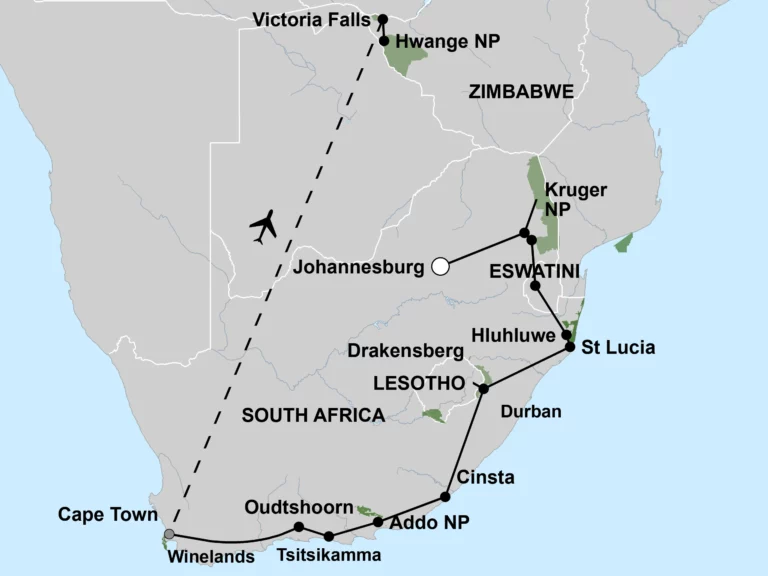
The route begins in Johannesburg and moves east into the wildlife-rich Lowveld, combining Kruger National Park with the scenic Panorama Route. From there, the journey crosses into Eswatini before continuing south through KwaZulu-Natal’s renowned conservation areas. The experience unfolds further along the coast, through the Wild Coast, Addo Elephant National Park, the semi-arid Klein Karoo, and along the Garden Route before reaching Cape Town. The final leg heads north to Zimbabwe for Victoria Falls, a Zambezi River cruise, and a safari in Hwange National Park.
This itinerary balances game viewing, cultural encounters, varied landscapes, and comfortable lodge stays, offering a comprehensive introduction to Southern Africa.
Tour Highlights
Johannesburg
Johannesburg is South Africa’s primary transport hub and economic centre, offering insight into the country’s complex past and dynamic present. The city combines modern business districts with historic neighborhoods, museums, and townships that tell the story of South Africa’s political and cultural evolution. Nearby Pretoria adds a quieter, more classical contrast with tree-lined streets and heritage architecture.
Graskop & the Panorama Route
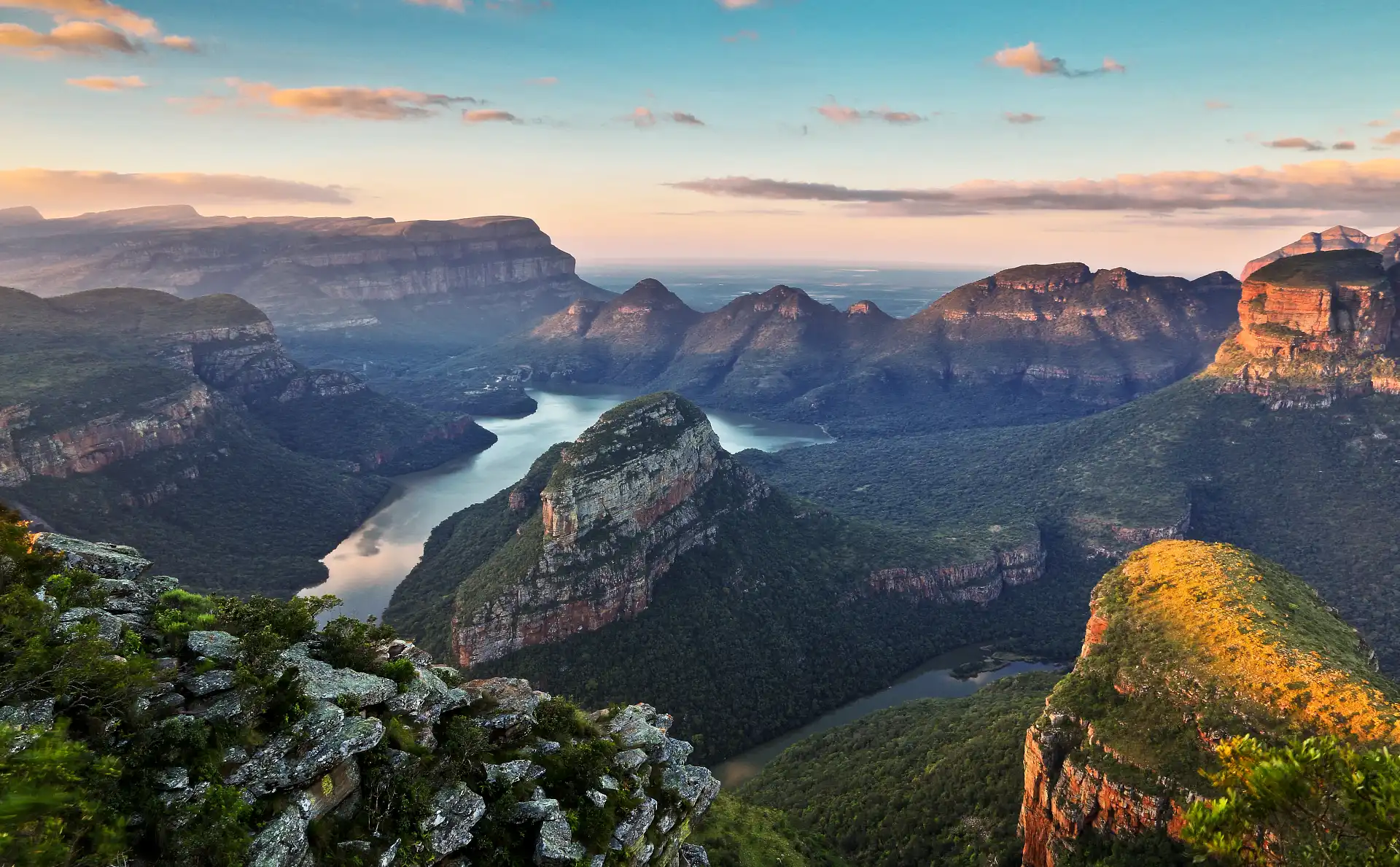
Graskop sits along the edge of the Drakensberg escarpment and serves as a gateway to Mpumalanga’s Panorama Route. The surrounding area is known for dramatic viewpoints, deep river canyons, waterfalls, and geological formations. Highlights include Blyde River Canyon, Bourke’s Luck Potholes, Pilgrim’s Rest, and a series of scenic waterfalls that showcase the region’s natural diversity.
Kruger National Park
Kruger National Park is one of Africa’s most established wildlife reserves, known for its biodiversity and excellent game viewing. The southern region is particularly productive, with frequent sightings of rhino, lion, elephant, and buffalo. River systems attract wildlife year-round, while open savannahs and bushveld create varied habitats that support a wide range of species.
Kingdom of Eswatini
Eswatini offers a compact yet diverse landscape of rolling hills, valleys, and grasslands. Mlilwane Wildlife Sanctuary, located in the Ezulwini Valley, provides opportunities to explore on foot and appreciate the country’s gentler wildlife encounters. Craft markets and cultural stops nearby offer insight into Swazi traditions and daily life.
Hluhluwe–iMfolozi Park
This historic conservation area is recognised for its role in rhino protection and conservation success. The park’s varied terrain of rolling hills and open plains creates excellent conditions for wildlife viewing. The surrounding region benefits from a subtropical climate, contributing to lush scenery and productive ecosystems.
Drakensberg Mountains
The Southern Drakensberg is characterised by layered mountain ridges, forests, rivers, and high-altitude grasslands. The region supports outdoor activities such as hiking, fishing, and scenic drives. Ancient rock art sites add cultural depth, while mountain passes provide expansive views across the escarpment.
Addo Elephant National Park
Addo Elephant National Park protects a wide range of habitats, from dense bush to open plains. It is particularly known for its large elephant population, but also supports lion, buffalo, black rhino, antelope, and extensive birdlife. Its proximity to the coast makes it one of the most ecologically diverse protected areas in South Africa.
St Lucia
St Lucia is a small coastal town set within the iSimangaliso Wetland Park. The surrounding estuary system is home to hippos, crocodiles, and a wide variety of bird species. Boat cruises offer close-up views of the estuary’s wildlife, while nearby beaches and forests provide additional exploration opportunities.
Chintsa
Chintsa lies along South Africa’s Wild Coast and is known for its long, uncrowded beaches and relaxed coastal atmosphere. The area combines river systems, indigenous vegetation, and open coastline, offering opportunities for swimming, kayaking, fishing, and beach walks in a quieter, less developed setting.
Oudtshoorn
Located along Route 62, Oudtshoorn is synonymous with ostrich farming and the Cango Caves. The surrounding semi-arid landscape contrasts sharply with coastal regions, adding variety to the journey. The caves showcase vast chambers and limestone formations shaped over millions of years.
Cape Town
Mountains and the ocean frame Cape Town, offering a blend of natural beauty, history, and urban energy. Visitors can explore iconic landmarks, coastal drives, vineyards, and neighbourhoods shaped by diverse cultural influences. The city serves as a fitting conclusion to the South African portion of the journey.
Victoria Falls
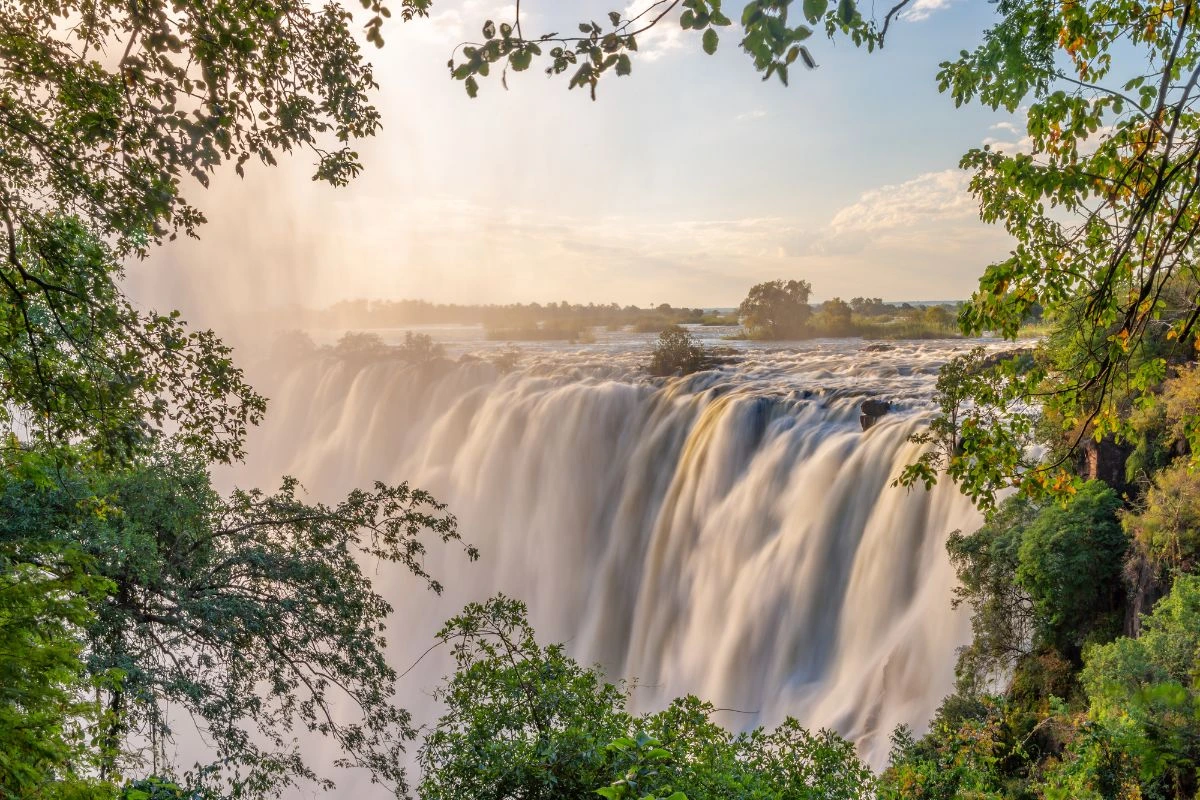
Victoria Falls is one of the world’s most powerful waterfalls, drawing visitors with its scale and constant spray. The surrounding town provides easy access to viewpoints, river activities, and adventure experiences. The Zambezi River forms a natural border and supports abundant wildlife upstream from the falls.
Hwange National Park
Hwange National Park is Zimbabwe’s largest protected area and is particularly known for its elephant populations. The park’s varied landscapes, including open plains, teak forests, and seasonal pans, support a wide range of wildlife and provide excellent safari conditions.